
The William Smith House

I've been selling farms and historic properties in western Loudoun for a long time. Long enough to know that a place like this doesn't come around very often — and when it does, it deserves more than a standard listing description.
So let me just tell you about it.
What This Property Is
The William Smith House is a Federal-style brick farmhouse built in 1813, sitting on just under 40 acres between the village of Hamilton and Purcellville. Four bedrooms, two and a half baths, approximately 3,276 square feet of living space — most of it in the main house, with a portion in a restored barn that I'll get to in a moment. There's a pond, a creek with a stone bridge, a two-story brick springhouse, a corn crib, a horse barn, a stone run-in, and a detached garage.
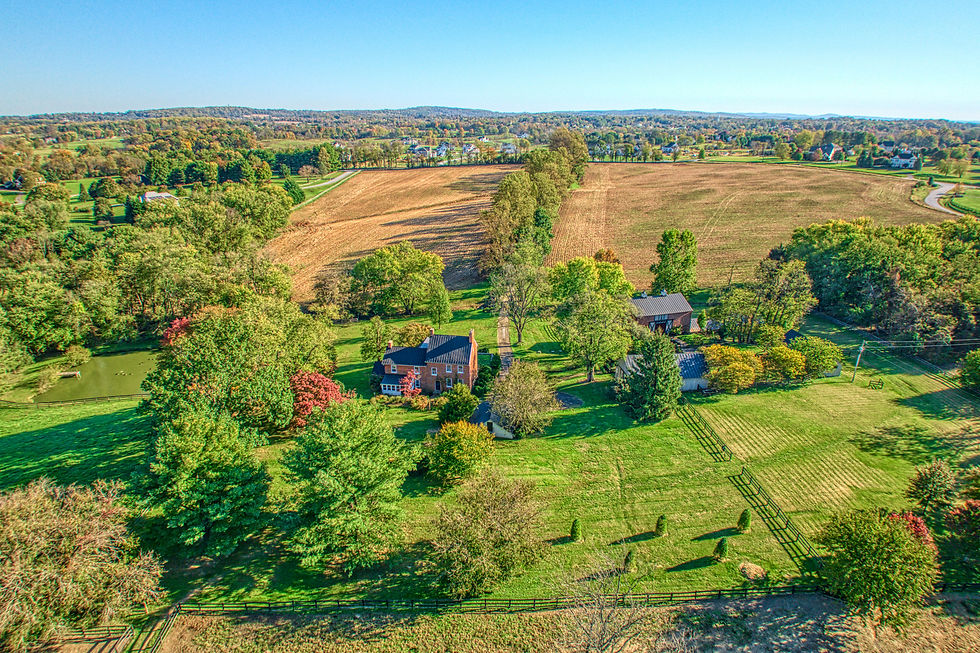
It is a complete property. It has everything you'd want a western Loudoun farm to have, and it has been here long enough to have earned every inch of it.
It is also, formally, a Virginia Historic Landmark and a property listed on the National Register of Historic Places. That matters, and I'll explain why toward the end of this post.
"It has been here long enough to have earned every inch of it."
The Man Who Built It
I find that historic properties are easier to understand when you know something about the person who built them. William Smith purchased this land in 1804, when he was 40 years old. He was a Quaker farmer — well regarded in the Loudoun Valley Quaker community, eventually made an elder in his Quarterly Meeting in 1814.
Like others of his faith, Smith owned no slaves but maintained his relatively small holdings through his own labor and that of his family and hired hands. He was only one generation removed from his parents' migration from Bucks County, Pennsylvania in 1769. The Quakers who settled in this part of Loudoun were industrious, principled people, and they built accordingly. They weren't building to impress anyone. They were building to last.
Six years after building the house, his sons John and Jonas were listed in the tax rolls as participants in the farming operation William had established. The family was taxed $10.14 that year on their personal property of 11 mules, colts and horses, two cattle, one two-wheel carriage, one watch and two candlesticks of silver or cut glass.
That kind of detail is what I love about these properties. It's not abstracted history — it's a named family, a specific place, a recorded life. And the structures they built are still standing.
The house was the center of a 212-acre farm that remained intact in Smith family ownership for 115 years. That kind of continuity is rare anywhere. In Loudoun County, it's extraordinary.
The Architecture
The front façade is laid in Flemish bond, with the remaining sides and wing primarily in five-course American bond. The interior woodwork is unusually fine for an isolated Loudoun County Quaker farming community of the early nineteenth century.
That last phrase has always struck me. "Unusually fine." William Smith wasn't putting on airs — that wasn't the Quaker way. He simply built with care and intention. The proportions are right. The craftsmanship holds up. Federal style, by design, doesn't date. It was conceived to be enduring, and it has been.

Inside, there's a double staircase, built-in cabinetry, wood floors throughout, and multiple fireplaces. The wide front porch looks out over a landscape that, in its essential character, hasn't changed much in two centuries. I live not far from here, on a farm in western Loudoun, and I can tell you that's not marketing language — it's just how it is out here.
The Barn
If I'm being honest, this is what stops you in your tracks.

The 1813 Federal brick barn is one of the few to survive the Civil War in Loudoun County. Loudoun was as contested as any county in Virginia during those years — occupied, foraged, fought over. The fact that this barn is still standing, in its original materials, is a testament to how well it was built.
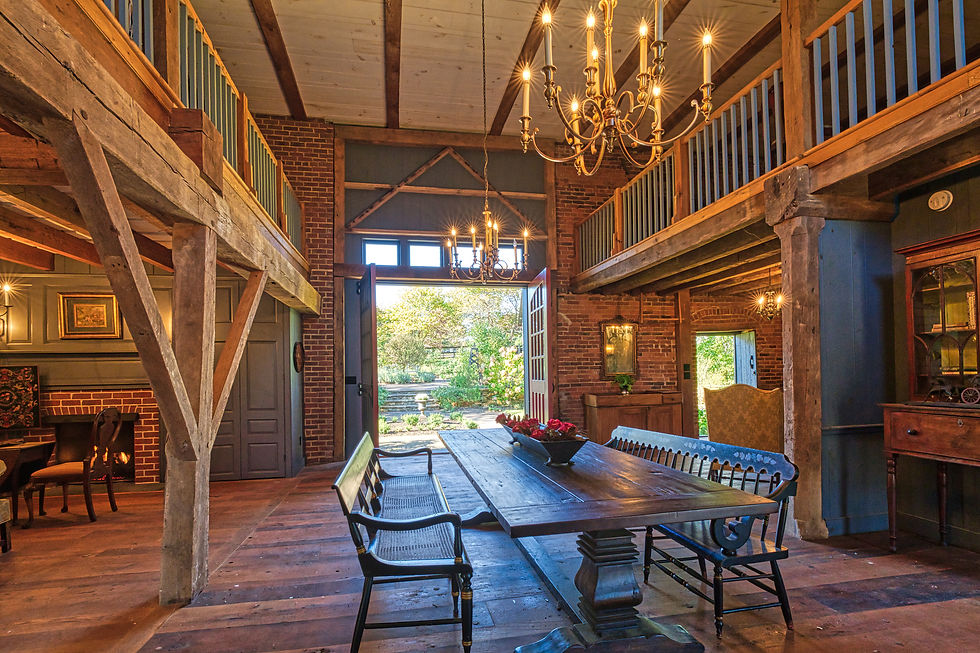
It was restored and converted into living space by Allan Cochran, a builder with a well-earned reputation in this region for knowing how to work with structures like this. The result is interior space with soaring ceilings, multiple fireplaces, and wood floors — the kind of space that simply cannot be created from scratch, no matter the budget. You either have it or you don't.
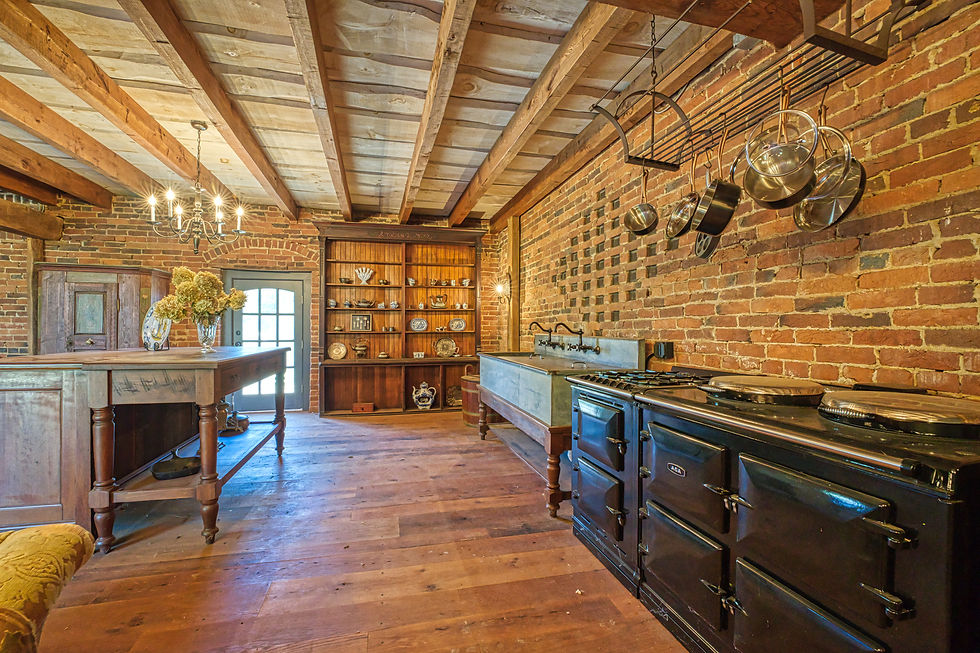
The barn features ventilation holes arranged in a diamond pattern — a detail that reminds you, every time you look at it, that you're standing inside something that was built by hand two hundred years ago and has outlasted almost everything around it.
"The kind of space that simply cannot be created from scratch, no matter the budget. You either have it or you don't."
The Grounds
The property enjoys a serene pond, a winding creek crossed by a stone bridge, and a lovingly restored corn crib. A rare two-story brick springhouse, also renovated, adds period character. A traditional horse barn and stone run-in complete the equestrian elements.
I keep horses myself, so I notice these things. The horse barn and run-in are practical and well-positioned. The nearly 40 acres offer the kind of room that lets both people and animals actually breathe. Some of the land is open, some wooded — a classic western Loudoun composition that gives you privacy without isolation.
The stone hardscaping and retaining walls throughout the grounds are extensive and well executed. They don't call attention to themselves, which is exactly right — they simply integrate the landscape with the structures, the way a farm of this age ought to look.
Hamilton and Western Loudoun
Hamilton sits six miles west of Leesburg, near the base of Catoctin Mountain, in the part of Loudoun that most people who live here consider the real Loudoun. It was first settled in the 1730s, and by the late 1800s had grown into Loudoun County's second-largest town — a destination where Washingtonians escaped the summer heat along a mile-and-a-half boardwalk, with a dance hall and a flat racecourse. It has a more settled, residential character now, with a population of around 600, and a genuine commitment to staying that way.
The property sits within what's known as the Harmony Cluster of the Loudoun Wine Trail — a stretch of country that includes Loudoun's oldest operational winery, Willowcroft Farm Vineyards, founded in 1983, as well as the Barns at Hamilton Station Vineyards, accessible from the W&OD Trail. It's in the heart of Virginia's horse and wine country, yet only about 25 miles west of Washington, D.C.
That proximity matters more than people expect. The Dulles Greenway puts Tysons Corner within about 35 minutes and Dulles Airport within 20. There's also commuter bus service from the Harmony Park & Ride, with direct routes into the city. You can genuinely live here full-time — it's not a weekend-only proposition.
Nearby Public Schools (Source: GreatSchools.org)
School | Grades | Distance | Rating |
Kenneth W. Culbert Elementary | PK–5 | 1.5 mi | 8 / 10 |
Blue Ridge Middle School | 6–8 | 3.0 mi | 7 / 10 |
Loudoun Valley High School | 9–12 | 2.4 mi | 8 / 10 |
A Word on Historic Designation
People sometimes hear "National Register of Historic Places" and assume it means restrictions. I want to be straightforward about this: listing on the National Register does not restrict what a private owner can do with their property. It's a recognition of significance, not a set of regulations.
A practical note on tax credits: Virginia's Historic Rehabilitation Tax Credit provides a 25% state tax credit on qualifying rehabilitation expenses for certified historic structures. The Federal Historic Tax Credit adds another 20% for income-producing properties. For a buyer considering future improvements to the barns, springhouse, or other structures, these credits can be meaningful — and worth a conversation with a tax professional who knows this area of law.
What it also means is that the federal government of the United States has formally determined that this property matters to the nation's heritage. The William Smith House has been on the National Register since 2003. Very few properties in Loudoun County carry that standing.
To Close
I don't think a property like the William Smith House needs a hard sell. If you're drawn to this part of the world — to the history of it, the landscape, the kind of quiet that western Loudoun offers — then this property will speak for itself when you walk it.

What it does need is the right buyer: someone who appreciates what they're acquiring and will care for it accordingly. If that's you, or if you know someone who fits that description, I'd be glad to arrange a visit.

All offerings subject to errors, omissions, or withdrawal without notice. Buyers should consult a qualified tax professional regarding historic tax credit eligibility. Equal Housing Opportunity. Each office independently owned and operated.


Comments